Lead in Los Angeles Tap Water: Where It Comes From
Lead is not present in Los Angeles’ source water, and the city does not add it. Where lead turns up in tap water, it enters somewhere between the water main and the faucet — from service lines, solder, brass fittings and fixtures inside individual buildings — which makes it a house-by-house question rather than a citywide one.
Where lead does appear, aging infrastructure is usually the reason. Some older homes and buildings still have lead solder, galvanized pipe or brass fixtures that can leach lead into the water.
Because the answer depends on what your own pipes and fixtures are made of, a citywide result cannot tell you what is coming out of your tap. Testing your own water is the only way to know where your household actually stands. By receiving a free water test, Los Angeles residents can find out what is in their own tap water.
How Los Angeles Manages Lead in Its Water System
Where lead does appear, aging infrastructure is usually the reason. As these pipes corrode over time, lead particles can leach into the water, especially when the water is acidic or has been sitting stagnant for long periods.
A utility’s responsibility for lead sits on its side of the meter: corrosion control treatment that keeps the water from pulling lead out of plumbing, annual sampling at household taps, and an inventory of the service lines it owns. What none of that reaches is the plumbing inside a privately owned building, which is where lead in tap water actually originates.
Lead gives no warning. It has no taste, no color and no smell, and the source is the plumbing inside the building rather than anything the utility delivers. That combination means one home can be fine and the house next door not, regardless of what the citywide numbers say, and testing is the only way to tell the difference.
Lead and Your Water in Los Angeles: Common Questions
Lead is worth understanding because a household cannot see, taste or smell it. In drinking water it comes from the plumbing between the water main and the tap rather than from the source water or the utility’s treatment, which is why the answer for any one home depends on that home’s own pipes and fixtures. Lead-based paint and lead in soil are separate exposure routes with their own testing and remediation.
1. Is there lead in Los Angeles drinking water?
Lead is not in the source water and LADWP does not add it. Where lead shows up at a tap, it has come from that building’s own service line, solder, brass fittings or fixtures — so whether there is lead in your water is a question about your property rather than about the city, and a test is how a household finds out.
2. How does lead exposure occur in Los Angeles?
Lead exposure can occur through various sources in Los Angeles, such as lead-based paint in older homes, contaminated soil, and drinking water from lead pipes or fixtures.
3. Who is responsible for lead in my water?
Responsibility splits at the property line. The utility treats the water to limit corrosion, samples household taps each year and reports the results, and maintains an inventory of the service lines it owns — your water utility can tell you whether your service line has been surveyed. The pipes, solder and fixtures inside the building belong to the property owner, and that is the part a tap test actually measures.
4. How can I test my home for lead in Los Angeles?
Homeowners in Los Angeles can contact certified lead inspectors or laboratories to conduct lead testing. The Los Angeles County Department of Public Health also provides information on lead testing and offers resources for lead-safe renovations.
5. What can I do to reduce lead at the tap?
Use cold tap water for drinking and cooking, run the tap briefly after water has been sitting in the pipes, find out what your service line and fixtures are made of, and have your water tested.
Because lead in drinking water comes from the plumbing inside each building, a citywide sampling result describes the system rather than any one home. That is what makes this a question settled at the property: testing your own water, using cold water for drinking and cooking, and knowing what your service line and fixtures are made of are what tell you where your household actually stands.
Solutions
Suggested Products

The Aquasential® Smart Reverse Osmosis Water Filter (RO)
- 7 stages of filtration and 12 filter options
- Certified for reduction of 58 contaminants
- 2-in-1 sediment and carbon filter screens out sediment and particles
- Can alert you and your dealer when service or filter replacements are needed

Aquasential™ Smart High Efficiency Whole House Water Filters
Reduce sediments in your water and contaminants that cause your water to appear, taste, and smell unpleasant. Your system can also lessen the taste and odor of chlorine, and prevent pipe damage and staining from low pH water. Additional customizations include:
- Culligan® Filtr-Cleer® Water Filters – Reduces Sediment Problems
- Culligan® Cullar® Water Filters – Reduces Taste and Odor Problems
- Culligan® Cullneu Water Filters – Reduces Acid Problems
Lead In Your Los Angeles Drinking Water
In its 2024 water quality report, the Los Angeles Department of Water and Power (LADWP) sampled 105 homes for lead and reported a 90th-percentile result of 3.9 parts per billion, below the 15 parts per billion action level. That is a real result, and it is worth being precise about what it does and does not say. The action level is a trigger for utility-side corrosion control. California’s public health goal for lead is 0.2 ppb, a non-enforceable target far below the level most labs report down to. And because lead comes from each building’s own plumbing, a sample of 105 homes describes the system, not your house.
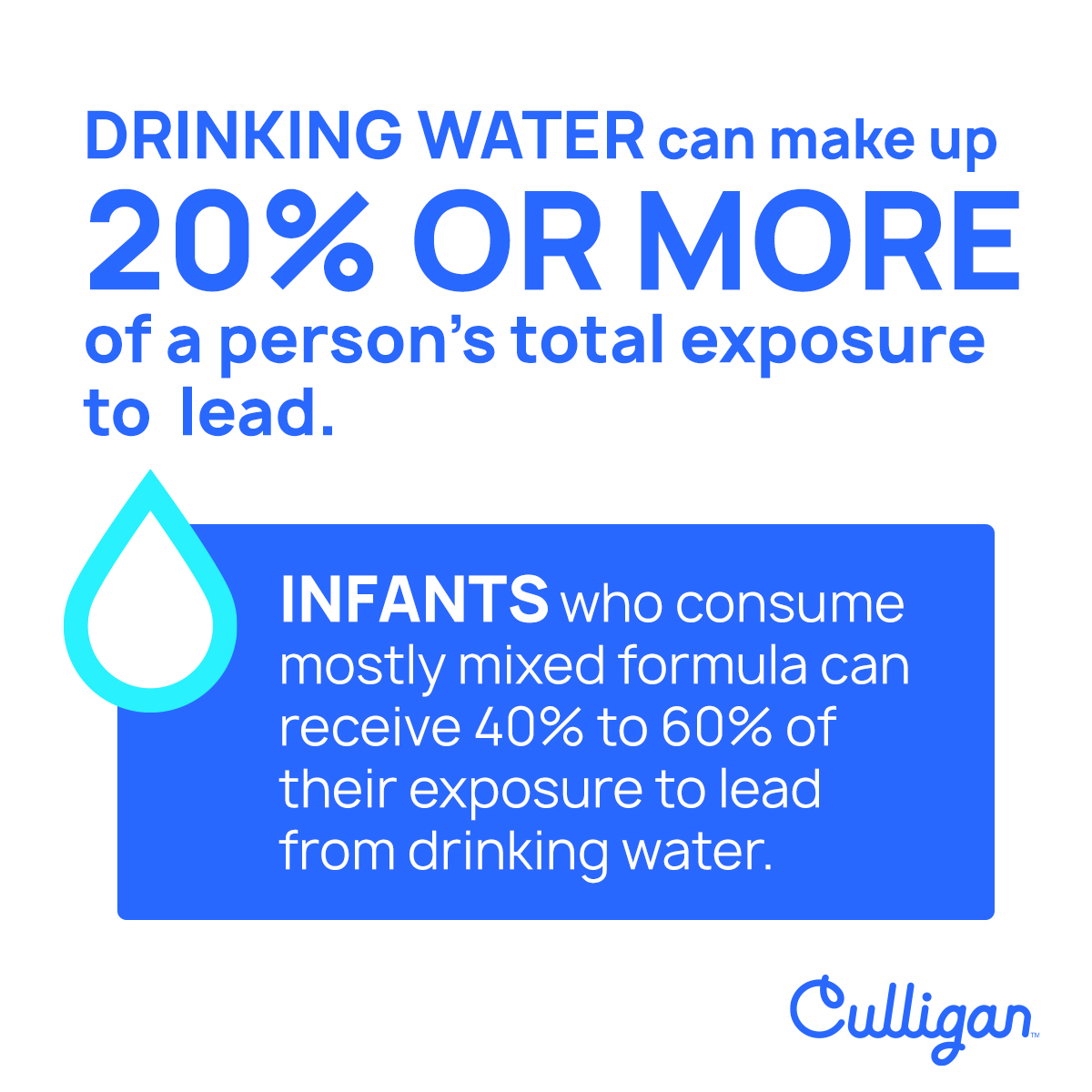
In the U.S., 14–20% of total lead exposure comes from drinking water, and in older homes with legacy plumbing systems, that number may be even higher. Over the past three decades, cities like Los Angeles have worked to reduce lead exposure by banning lead solder, minimizing corrosivity in water treatment, and replacing lead service lines. These efforts have reduced lead levels overall.
Older plumbing is the main factor in whether lead shows up at a tap.
Lead’s long history in plumbing plays a big role in today’s contamination risks. It was widely used because it’s cheap and easy to mold, which made it a popular material for pipes and solder. In the U.S., lead piping was standard until the 1920s and 1930s, and many older neighborhoods in Los Angeles—especially those built before 1986—may still contain legacy lead plumbing components.
How Lead Enters Los Angeles Drinking Water Systems
In Los Angeles, most lead contamination doesn’t start at the water treatment plant—it starts in your home. The LADWP’s treated water typically leaves facilities lead-free, but it can pick up lead as it moves through service lines, plumbing, and fixtures.
Aging infrastructure is the biggest culprit. Many Los Angeles homes built before the Safe Drinking Water Act amendments in 1986 still contain lead pipes, lead solder, or brass fixtures with lead content. Over time, these components corrode, especially when the water is acidic or has high mineral content. This corrosion allows lead particles to leach into your drinking water.
When water sits in lead-containing pipes for extended periods—such as overnight or during low usage—it has more time to absorb lead. Disturbances in the plumbing system, like repairs or construction, can also dislodge lead particles and release them into your tap water.
Risk tracks the age of the building rather than any particular part of the city. Properties built before the 1986 federal restrictions on lead solder and lead-bearing plumbing are the ones most likely to still contain legacy lead components. Because the plumbing inside a property is privately owned, a utility-side service line program cannot reach it, which is what keeps this a house-by-house question.
The best way to know where your home stands is to test your water regularly, especially if you live in an older home. You can also install a certified lead-removal water filtration system, such as those that use reverse osmosis or activated carbon.
Proactive Prevention: The Best Deterrent
The best way to avoid a lead problem is to never have one. Despite the ongoing issues in many cities throughout America, many homeowners are simply not keen on getting a simple water test.
A test can determine whether your household has lead in its tap water, and whether that exposure can be reduced in the interim by flushing the line for a specified amount of time. Knowing this tells you what, if anything, needs to change at your tap.
Treated water can still pick up lead on its way to the tap if the pipes, solder or fixtures in the building contain it, which is why the test that matters is the one taken at your own faucet.
Related Content
Learn More About Your Water


Facebook